Vol. 1 · Traffic desk

Maps drawn from memory

Serving the township-adjacent since whenever

The Brunstucky Ledger

An unofficial record of the roads, the restaurants, and the landmarks that used to be somewhere else.

Cone AlertThe detour sign is technically visible if you already know where you are going.

Cone Watch

Detours, traffic lore & maps drawn from memory

A public-service section for anyone whose preferred route begins with “you can’t get there from here, but…”

Roadside dispatches

Unofficially timed
  • Local driver swears this detour used to be faster
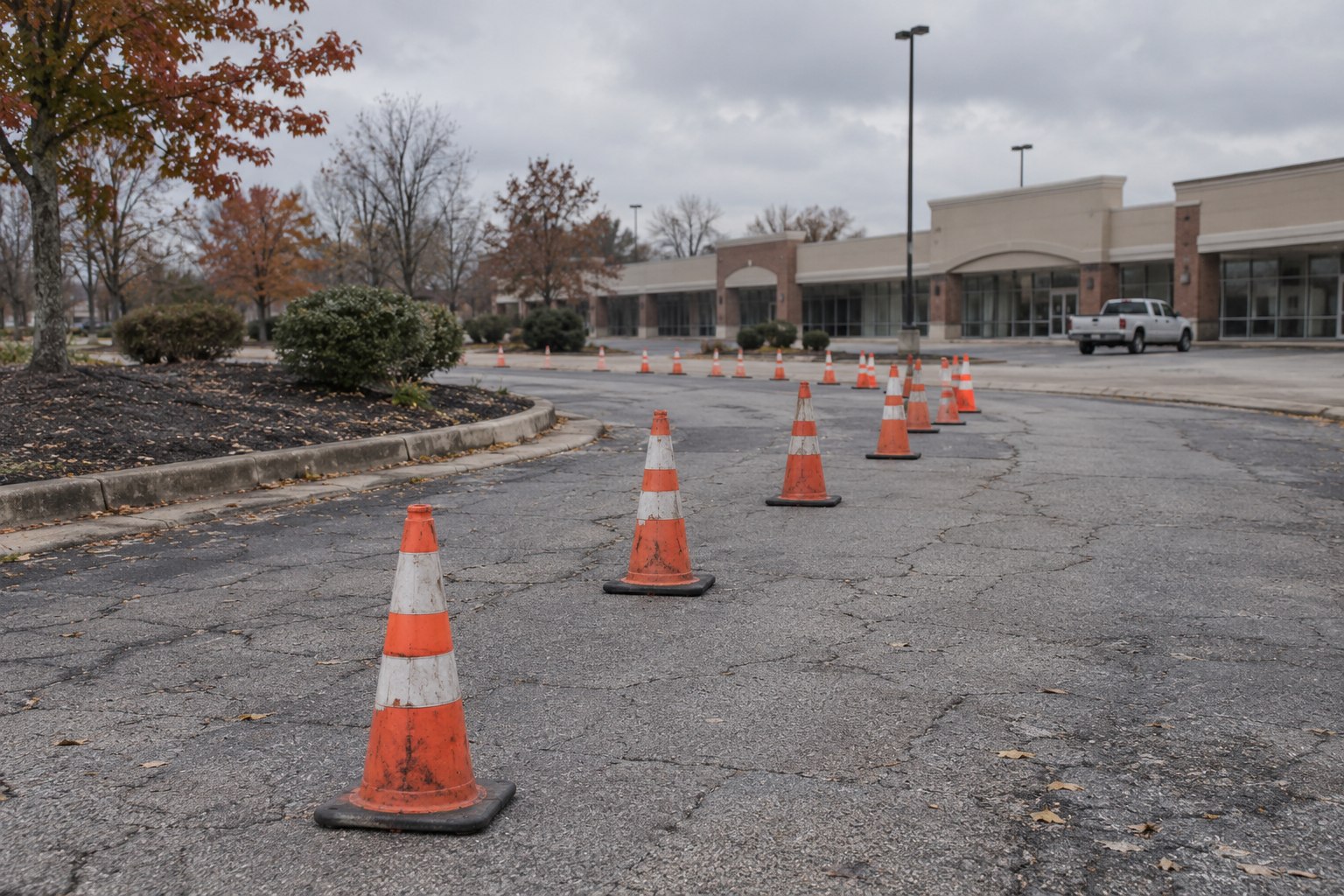
    A winding line of orange traffic cones on worn pavement leading toward a quiet shopping plaza.
    The back way now offers all the inconvenience of the main road, with better trees.

    A Brunstucky commuter has renewed his defense of the back way, a route whose advantages depend on the year, the weather, and whether you count the time spent explaining it. He estimates it saves seven minutes. His passenger estimates it adds a stop sign, two apologies, and a story about a building nobody remembers.

    The route begins near Center Road, which he calls 303 when making a serious point. It then passes the place where the old thing used to be, turns before the newer old thing, and briefly enters a neighborhood solely because his uncle once went that way. Written directions require a family tree.

    At 4:47 p.m., three other vehicles appeared behind him. He interpreted this as public confidence in his method. His passenger suggested they might live there. The distinction became academic when all four reached the same red light as the traffic they had courageously escaped nine minutes earlier, carrying considerably more opinions.

    The driver insists the route remains sound if you leave before everybody else, avoid school pickup, and encounter no one making a left. He has also identified an unusually favorable Tuesday in 2017 as supporting evidence. His passenger remembers that Tuesday because they were going somewhere entirely different and forgot the item they needed.

    A new timing attempt was abandoned when a familiar porch prompted a discussion of who once had the enormous inflatable pumpkin. This added four minutes, though the driver classified them as community maintenance. He then demonstrated where he would have turned if the person ahead had not already turned there first.

    They eventually arrived together, which remains the back way's strongest result. While unloading the car, the passenger admitted the route did have nice trees. The driver accepted this as a complete endorsement. He has scheduled a rematch for next week. The passenger has requested doughnuts and an independent timekeeper.

  • Shortcut debate reopens near school pickup

    The Ledger's school pickup correspondent reports that two parents arrived eighteen minutes early to discuss which route would make them least late. One favors the back way. The other believes the back way is a recreational tour of everybody's recycling bins. Both had prepared diagrams, although one was drawn on a permission slip.

    The opening argument concerned whether a turn counts as a turn when the road merely bends and you point at it. This question occupied six minutes and involved a granola bar as a vehicle. A second granola bar represented Pearl Road until somebody ate it, causing the first major change to the proposed network.

    Supporters of the back way cited fewer lights, better shade, and the emotional relief of feeling clever. Opponents cited more stop signs, a driveway that always looks like a street, and the fact that cleverness cannot pick up a child. A neutral observer said either route worked if you remembered the correct dismissal time.

    That observation was dismissed as technically helpful. The discussion moved to whether taking Center Road was quicker before or after saying you should have taken Center Road. By then a third parent had joined with directions involving an old landmark, a newer mailbox, and a turn that only makes sense from the other direction.

    Inside the cars, the children had settled a separate transportation dispute by agreeing that the best vehicle was whichever contained crackers. Outside, their parents continued to debate the final sixty yards of the trip. One offered to run a fair comparison tomorrow. The other agreed, then immediately introduced three conditions that made tomorrow unfair.

    When pickup began, the diagrams disappeared beneath backpacks and the entire committee remembered its purpose. Both families got home with children, water bottles, and approximately half the right jackets. The parents waved goodbye and promised to compare notes. Neither saved a minute, but each now knew someone who would notice if they failed to arrive.

  • New lane pattern described as “actually not bad once you accept it”

    In an exercise at the Ledger's map desk, a new lane pattern has won guarded praise from a commuter who spent the first pass narrating his objections to an empty passenger seat. On the second pass, he called it manageable. By the third, he was offering lessons to relatives who had not requested them.

    The desk's diagram contains two arrows, one merge, and the same number of destinations as before. This has not prevented participants from treating it as a personal test. One volunteer brought reading glasses. Another brought the memory of a perfectly good intersection from childhood, which fit poorly on the current sheet of paper.

    Acceptance reportedly arrived when the commuter followed the arrow above his lane instead of the route he could picture with his eyes closed. The resulting sensation of competence was so unexpected that he called a cousin after parking. The cousin said she already understood it. He continued explaining for eleven minutes to be certain.

    The new believer now distinguishes between people who have accepted the diagram and people who remain emotionally in the old left lane. He uses this distinction at breakfast, where it has proved less useful. His family has asked him to stop arranging toast into traffic movements, particularly while someone is attempting to butter the merge.

    A dissenting participant admits the exercise became easier once she put down the complaint she had been carrying. She still prefers her own version, which replaces every arrow with the phrase you know where I mean. It works beautifully among four relatives and fails immediately when handed to anyone who moved here after their favorite landmark disappeared.

    The map desk closed the experiment with coffee and a gentle reminder that learning something twice is allowed. Our commuter folded his diagram for a future cousin visit. Everyone reached the same conclusion: a little patience helps, a clear arrow helps more, and sometimes the most impressive local knowledge is letting the person beside you finish their turn.

  • Pothole earns name, directions, and mild respect

    A road dip has acquired the nickname That One, granting it immediate membership in Brunstucky's informal address system. Residents of the neighborhood now place it between the old thing and the plaza where you used to get the other thing. Visitors have requested a noun.

    One passenger says its chief achievement is ending the sentence we'll know it when we see it. Another claims to recognize it by the way everyone secures their coffee first. The map desk admires a landmark that inspires people to slow down and ask whether everybody in the car is comfortable.

  • Passenger-car-only ramp proposed by man who drew it on a receipt

    A commuter has unveiled his personal solution to I-71 access on the back of a receipt, between a coffee ring and a coupon he still intends to use. The proposal includes a passenger-car-only ramp, several optimistic arrows, and a patch marked probably enough room.

    Asked how the idea would work, he supplied the verbs could, might, and ought to in impressive rotation. His lunch companion contributed a drawing of a very patient squirrel. The lunch companion asked about the engineering. The commuter pointed to the receipt's straight edge. The receipt returned to his pocket after lunch, where the ramp now connects directly to three peppermints and a spare mitten.

  • Secret shortcut leaks, immediately becomes traffic

    The neighborhood's most carefully guarded shortcut enjoyed nine peaceful years before its guardian explained it clearly at a cookout. By dessert, six people understood the turn. By Monday, the guardian felt the route had lost its essential character, namely being used by him alone.

    He briefly considered changing the directions to turn near the thing, a phrase with a proven ability to discourage newcomers. Instead, he found himself waving to the same neighbors he had recruited. The route is now slightly slower and considerably friendlier. He still calls it a secret, though everyone waiting at the stop sign has promised to keep it among themselves and their immediate relatives.

The map desk

Turn Left at the Thing That Is Gone

Our newest navigation guide recognizes that some directions are based on buildings that have been gone since 2009.

Fold before driving, obviously

The commute index

Three Jackets, One Snow Brush, No Certainty

Conditions are partly suburban with a 100% chance somebody knows a better route.

Forecast by vibes

Cone Watch reader policy

If you can describe a route without naming a street, you are already on staff.